Why October Is the Deadline
Los Angeles does not get much rain, and that is precisely the danger: what we get arrives concentrated. Most of the year's water lands in a handful of storms between late fall and early spring, and when an atmospheric river sets up, a single system can deliver days of continuous, wind-driven rain onto roofs and drains that have been quietly collecting debris since April.
An atmospheric river is not a catastrophe for a prepared building; it is a scheduled test. The failures we see in the first storm are rarely exotic. They are blocked paths: the valley full of leaves, the scupper behind a parapet nobody has looked at, the planter drain bound up in roots. October is the month to walk the property, because once the first storm lands, every roofing calendar in the county fills at once.
Drainage First: Valleys, Gutters, Drains, and Scuppers
Start with where the water goes, not where it lands. More first-storm damage comes from blocked drainage than from failed roofing. The roof shed the water exactly as designed, and the water had nowhere to go. Clear the valleys of leaves and debris. Flush gutters and downspouts, and confirm the downspouts discharge away from the building, not against the foundation.
On flat roofs, find every roof drain and scupper and open it: strainers in place, bowls clear, the line actually flowing. A hose test on a dry day tells you in thirty seconds. Pay respect to the overflow scuppers, the openings set higher in the parapet. They are the roof's last defense when a primary drain clogs mid-storm, and they only work if they, too, are clear.
Then the Roof Itself
With the paths open, look at the surface. From the ground or a ladder at the eaves: tiles slipped out of line, shingles cracked or lifted, flashing at chimneys and walls that has pulled away, and the sealant at vents and penetrations. Mastic that has cracked into dry mud is finished sealing anything.
The on-roof portion belongs to someone equipped for it. A pre-season inspection means someone gets on the roof, photographs its condition, and hands you the findings in writing while there is still time to act on them — which is the entire point of doing this in October instead of during the storm.
Decks, Balconies, and Planters
This is where roofing and waterproofing stop being separate subjects. A walking deck or balcony is a flat roof you furnish: its coating is the membrane, and worn traffic paths, cracks at posts and corners, and failed sealant at door thresholds are all entries rain will find. Confirm the deck's drains and drip scuppers are clear, and look hard at the transition where deck meets wall — water that gets in there travels inside the framing, unseen.
Planters are the quiet one. A planter set against a wall combines soil, daily irrigation, and — if its drain is blocked — a reservoir pressed against your building all winter. Clear planter drains, and if a planter wall shows staining or a white mineral bloom on its far side, it is telling you the waterproofing behind it has already been asked to do too much.
Below Grade: Where Water Wins Quietly
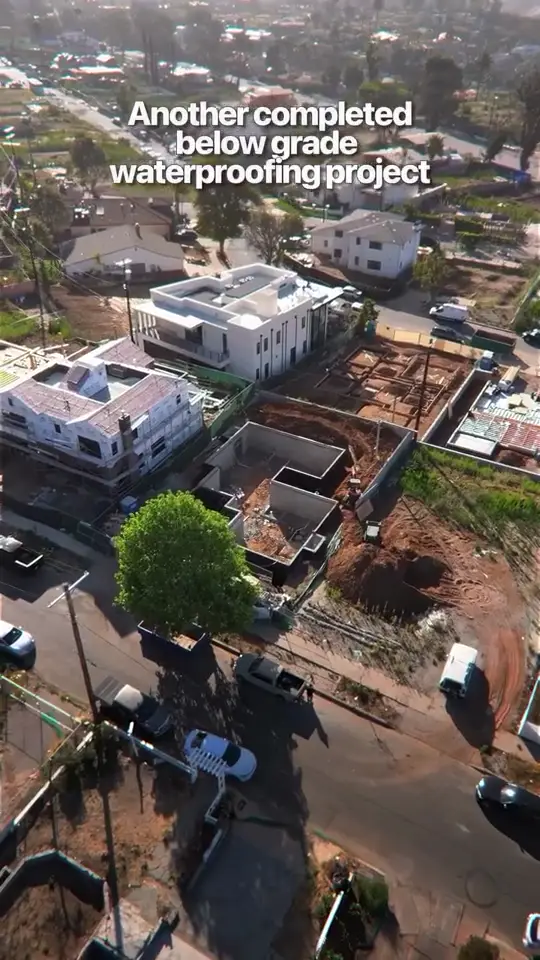
Water that gets below grade does its work out of sight. Before the season: run water into area drains and confirm it leaves; test the sump pump by filling the pit until the float trips, then listening for it to run and stop; clear light wells and window wells of leaves; and check that soil and hardscape still slope away from the building rather than toward it.
On retaining walls, confirm the weep holes at the base are open. They are the wall's pressure relief, and a season of soil movement can seal them. Below-grade trouble announces itself early as a musty smell or efflorescence on concrete. Those signs in November are a warning; the same signs in February are a project.
An Afternoon Now, or a Bad Week in January
Most of this list is an afternoon with gloves, a hose, and binoculars: paths cleared, drains tested, the pump heard running, downspouts aimed away from the building. It is unglamorous work, and it is the highest-return afternoon a Los Angeles property owner spends all year.
Bring us in for the rest: the on-roof inspection, drain lines that will not clear, coatings showing wear, and anything that already stained last winter. We do both halves of this checklist, the roof and the waterproofing below it. That is exactly why the checklist looks the way it does. The inspection is free, and the findings arrive in writing.